

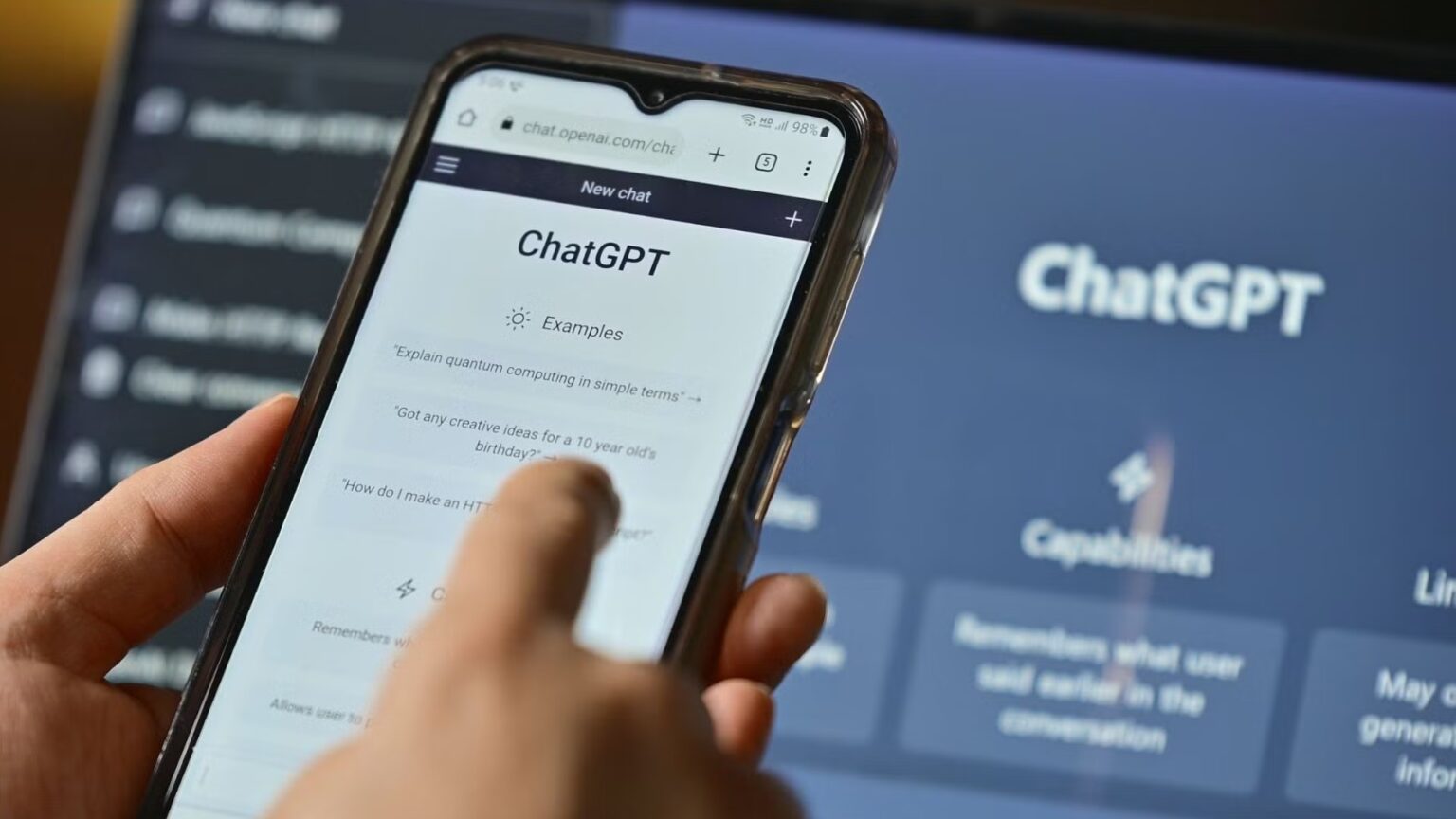
The 2026 AI Privacy Reckoning
The year the promises about your private AI conversations quietly fell apart — a timeline.
For two years we were told the same thing: type anything into an AI assistant, it's just between you and the machine. Ask it about your health, your finances, your marriage, your legal trouble. It felt private because it felt like a conversation.
Then 2025 and 2026 happened. Court orders. A CEO admitting your therapy chats aren't protected. Companies scanning messages and calling the police. A billion-dollar privacy settlement. Studies showing your chats being handed to ad networks. And a breach that spilled 300 million private conversations onto the open internet.
None of it was a conspiracy. It was just the machinery working exactly as built. Here is what actually happened — every item below traced to a real, working source — and what all of it has in common.
The timeline
May 2025 — A judge orders OpenAI to stop deleting "deleted" chats
In the copyright case brought by The New York Times, a federal magistrate ordered OpenAI to preserve and segregate its ChatGPT output logs — including conversations users had deleted and chats that its own 30-day policy would normally erase. For most consumer and API users, "delete" stopped meaning delete. By early 2026 a district judge had upheld an order for OpenAI to hand over 20 million conversation logs as evidence. (Engadget)
June 2025 — Reddit sues Anthropic over scraped posts
Reddit filed suit alleging that the maker of the Claude assistant scraped its users' posts and comments — including deleted ones — to train AI, making more than 100,000 requests to Reddit's servers even after saying it had stopped. Whatever the outcome, the lawsuit put a number on something most people never agreed to: the words you post in public are quietly becoming training fuel. (AI News)
July 2025 — OpenAI's CEO admits your therapy chats have no legal protection
Sam Altman said out loud what most users assumed was untrue: talk to a real therapist, lawyer, or doctor and the law shields that conversation. Talk to ChatGPT the same way and there is no such privilege. In a lawsuit, he acknowledged, the company could be compelled to produce your most personal chats. He called the situation "very screwed up." (TechCrunch)
August 2025 — OpenAI confirms it scans conversations and can report you to police
Weeks after the "treat it like a therapist" comment, OpenAI disclosed that it scans messages for certain content, routes worrying cases to human reviewers, and — when reviewers judge an imminent threat to others — can refer them to law enforcement. Reasonable in intent, perhaps. But it confirmed the thing that matters here: a human you'll never meet can read what you typed, and act on it. (Futurism)
November 2025 — Google pays Texas $1.375 billion over data collection
Texas finalized the largest single-state privacy settlement ever against Google, resolving claims that it tracked users' location even after they turned tracking off, misled people about "Incognito" mode, and captured biometric data like voiceprints and face geometry. This is the company whose ad and analytics network sits behind much of the web — including, as you'll see below, AI chat tools. (Texas Attorney General)
February 2026 — 300 million private AI messages leak from 25 million users
A researcher found that Chat & Ask AI — a popular app that pipes your prompts to ChatGPT, Claude, and Gemini — had left its database misconfigured. The result: roughly 300 million messages from more than 25 million people, including entire chat histories, sitting exposed. The same researcher found that half of the 200 apps they scanned had similar holes. Your data wasn't hacked so much as left on the table. (Malwarebytes)
February 2026 — A hidden channel in ChatGPT could quietly siphon your data out
Security firm Check Point disclosed a flaw in the sandbox where ChatGPT runs code and reads your uploaded files. A single malicious prompt could open a hidden outbound path and smuggle out conversation text, uploaded documents, even medical data — bypassing the very protections meant to contain it. OpenAI patched it in February 2026, and there's no evidence it was abused. But it shows how much of "your" data lives on someone else's server, one bug away from leaving. (Check Point Research)
May 2026 — A study finds the big chatbots leak your chats to ad networks
Researchers at the IMDEA Networks Institute examined ChatGPT, Claude, Grok, and Perplexity and found all four quietly sharing data with third-party ad and analytics trackers — Meta, Google, TikTok among them — often even when users declined cookies. For one assistant, message content reached a tracker directly; for another, the data flowed through the company's own servers, so an ad blocker couldn't stop it. The very thing you went to a chatbot to keep private was being described to the advertising machine. (Decrypt)
The pattern — and the way out
Eight separate stories. Different companies, different failures — a court order, a leaky app, a hidden bug, an ad tracker, a police referral. Every single one has the same root cause: your words left your device.
That's the thread. A chat can be subpoenaed only because a company is holding it. It can leak only because it's stored on a server somewhere. It can be scanned, reported, sold to advertisers, or scraped for training only because it traveled somewhere you don't control. The privacy problem isn't any one bad actor. It's the architecture — the fact that "private" AI runs on someone else's computer, and you're trusting a policy page to protect you.
Change that one fact and the whole list collapses. If the AI runs entirely on hardware you own, offline, with nothing sent anywhere, then there's no server log to preserve, no database to misconfigure, no tracker to fire, no reviewer to read your chat, no training pipeline to feed. There's just you and the machine — the way it was supposed to work all along.
That's the entire idea behind VaultAI. It's a private AI you own outright: it runs on your own device, with no cloud, no accounts, no subscriptions, and no data ever leaving your hands. Your conversations stay yours because they physically never go anywhere else. No policy page required — the privacy is built into where the work happens.
Nothing to subpoena
Your chats never touch a company's servers, so there's no log for a court, a company, or anyone else to hand over.
Nothing to leak
No cloud database means no misconfigured bucket spilling your private conversations to the open internet.
Nothing to sell
No trackers, no ad networks, no training pipeline. What you type is never described to anyone, ever.
2026 was the year the illusion broke — the year we learned that "private" AI in the cloud was always a promise, never a guarantee. The good news is the fix is simple, and it already exists. Keep the AI. Just keep it home.
Share:
The Person in Charge of Protecting Your Data Just Leaked His